
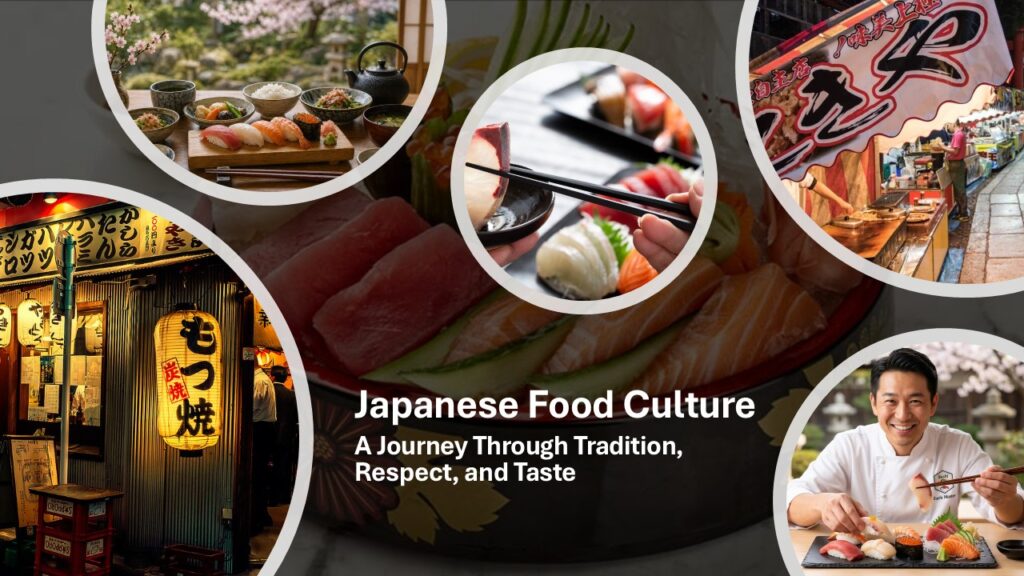
Japanese food culture is not just about what people eat; it is about how they think, feel, and connect through food. It is a cultural system built on respect for nature, attention to detail, and a deep appreciation for simplicity. Every meal tells a story, shaped by centuries of tradition and a strong connection to seasonal living.
1. The Philosophy Behind Japanese Cuisine
At the heart of Japanese food culture is a simple but powerful idea: harmony. Food is not treated as something to merely satisfy hunger, but as something that must be balanced in taste, appearance, and nutrition. This philosophy is often expressed through the concept of balance between five colors, five tastes, and five cooking methods.
Unlike many modern food cultures that prioritize complexity or richness, Japanese cuisine values simplicity. A dish does not need many ingredients to be meaningful. Instead, the focus is on enhancing the natural flavor of each ingredient. This is why even the simplest bowl of rice or miso soup can feel deeply satisfying.
2. The Importance of Seasonality
One of the most defining features of Japanese food culture is its strong connection to the seasons. Known as shun, this principle means eating ingredients at the exact time they are naturally at their best.
In spring, meals are light and fresh, often including young vegetables and delicate flavors that reflect renewal. Summer brings cooling dishes such as soba noodles and seasonal seafood. Autumn is rich with earthy flavors like mushrooms, sweet potatoes, and chestnuts. Winter focuses on warmth and comfort, with hot pots and simmered dishes shared among family and friends.
This seasonal awareness is not just about taste; it is a way of living in harmony with nature’s rhythm.
3. A Meal Built on Balance
A traditional Japanese meal is carefully structured to ensure nutritional balance and variety. A typical meal includes steamed rice, miso soup, pickled vegetables, and a protein such as fish, tofu, or meat. This combination is simple, yet thoughtfully designed.
Rice is the foundation of every meal and is deeply respected in Japanese culture. It is more than food; it symbolizes life, gratitude, and prosperity. Soup adds warmth and depth, while pickled vegetables bring contrast and freshness. Together, they create a complete and balanced experience.
4. Food as an Art Form
In Japan, food is not only prepared; it is crafted. Presentation plays a major role in the dining experience. Every dish is arranged with care, considering color harmony, plate selection, and seasonal themes. Even the placement of a single garnish is intentional.
This attention to detail reflects a broader cultural belief: food should be pleasing to all senses, not just taste. A beautifully presented dish enhances appreciation and encourages mindful eating.
Restaurants and home kitchens alike follow this principle, turning everyday meals into small works of art.
5. Etiquette and Respect at the Table
Japanese dining culture is also rooted in respect and gratitude. Before eating, people say “Itadakimasu,” which expresses appreciation for everyone involved in preparing the meal; from farmers to chefs. After eating, “Gochisousama deshita” is said to acknowledge the effort behind the food.
Chopstick etiquette is also important. Simple gestures like not pointing chopsticks or passing food directly from one pair of chopsticks to another reflect cultural awareness and respect.
These practices show that food is not just personal nourishment, but a shared experience connected to others and nature.
6. Modern Evolution of Tradition
While deeply traditional, Japanese food culture has also evolved with time. Modern Japan has embraced innovation while preserving its culinary roots. Convenience, technology, and globalization have influenced how food is prepared and enjoyed, but the core values remain unchanged.
Today, you can find everything from high-end kaiseki dining to casual ramen shops and conveyor belt sushi restaurants. Each format offers a different way of experiencing Japanese cuisine, yet all are grounded in the same principles of freshness, balance, and respect.
7. Experiencing Japanese Food Culture Today
For those who want to experience authentic Japanese food culture in a modern and accessible way, restaurants like Kura Sushi offer a unique opportunity. Kura Sushi is a well-known Japanese sushi chain that brings together traditional culinary values and innovative dining technology.
At Kura Sushi, guests can enjoy freshly prepared sushi and a variety of Japanese dishes served through a revolving conveyor belt system. This creates an interactive and engaging experience while still maintaining the essence of Japanese simplicity and freshness. The restaurant combines authenticity with convenience, allowing people to explore Japanese cuisine in a fun, modern setting.
8. Experiencing Japanese Food Culture Through TPS Japan Tour
Beyond reading about Japanese food culture, the real value comes from experiencing it firsthand. Through the TPS Japan Study Mission, participants will have the opportunity to explore authentic Japanese cuisine throughout the entire tour. From traditional meals rooted in seasonal ingredients to carefully prepared dining experiences in local settings, food becomes an integral part of the learning journey.
Participants will not only observe Japanese culture but actively experience it through curated dining experiences across different regions of Japan. This includes both traditional restaurants and modern interpretations of Japanese cuisine, offering a complete perspective on how food culture has evolved while staying true to its roots.
One of the highlighted experiences includes visiting well-known dining concepts such as Kura Sushi, where participants can enjoy Japanese sushi in a modern yet culturally authentic environment. Alongside this, several other carefully selected restaurants will be part of the tour, allowing participants to experience a wide range of Japanese culinary traditions.
Through the TPS Japan tour, food becomes more than a meal; it becomes a learning experience, connecting participants directly with the philosophy, discipline, and culture that define Japanese cuisine.
Conclusion
Japanese food culture is a reflection of respect; respect for ingredients, for nature, and for the people who prepare and share meals. It is a culture where simplicity becomes elegance, and where every meal carries meaning beyond taste.
From seasonal traditions to artistic presentation and mindful eating practices, Japanese cuisine offers a complete cultural experience.